Airway Orthodontics: An Evidence-Based Perspective
Airway Orthodontics and Palatal Expansion: An Evidence-Based Orthodontist’s Perspective
Airway orthodontics has become one of the most discussed and sometimes controversial topics in orthodontics. Parents are increasingly being told that mouth breathing, snoring, narrow jaws, or certain facial characteristics mean their child needs orthodontic treatment or palatal expansion.
At Life Orthodontics, we believe airway health absolutely matters, and we routinely use palatal expanders when there is a legitimate orthodontic reason to do so. However, our philosophy is intentionally conservative: we don't believe every child with a narrow palate, snoring, mouth breathing, or a possible airway concern needs immediate orthodontic expansion.
We frequently meet families with children between ages 5 and 10 who have been told by another dental professional that their child needs an expander right away. Sometimes we agree completely. Other times, we find that the orthodontic indication for expansion is minor, or that there is no meaningful advantage to treating at that age rather than waiting until the child is closer to comprehensive orthodontic treatment.
In those situations, we often recommend monitoring growth instead. If expansion can be performed predictably at age 11 or 12 and incorporated into one comprehensive phase of orthodontic treatment, we may be able to avoid putting a child through an additional phase of treatment years earlier. This can mean fewer appliances, fewer appointments, less total time in orthodontic treatment, and lower overall cost for the family.
Our philosophy is simple: There should be a clear reason to treat a child now rather than later.
Airway concerns can certainly be part of that decision. But current scientific evidence does not support routinely expanding children simply to prevent future sleep-disordered breathing. Symptoms such as snoring or mouth breathing also do not, by themselves, establish that a child has obstructive sleep apnea.
If you'd like to understand why we take this approach, the rest of this blog post explains what the current evidence tells us about airway orthodontics, sleep apnea, and palatal expansion.
What Does the AAO Say About Airway Orthodontics?
One of the most important organizations we look to for guidance is the American Association of Orthodontists (AAO). The AAO is the world's oldest and largest dental specialty organization and represents approximately 19,000 orthodontists in the United States, Canada, and around the world.
In 2026, the AAO published an updated white paper titled Sleep-disordered breathing and orthodontics: An American Association of Orthodontists white paper update in the American Journal of Orthodontics and Dentofacial Orthopedics. The AAO's Board of Trustees commissioned a panel of orthodontic experts in dental sleep medicine to review the evidence and provide guidance to practicing orthodontists about our role in managing obstructive sleep apnea and other sleep-disordered breathing conditions. Several of its conclusions are particularly important for parents (Reference).
The AAO concluded that orthodontists can play a role in screening for possible sleep-disordered breathing. However, current evidence does not support the claim that orthodontic treatment can prevent a patient from developing sleep-disordered breathing. It also found no evidence that orthodontic procedures affect the underlying cause of sleep-disordered breathing or increase its likelihood (Reference).
The AAO also concluded that current evidence does not support using craniofacial imaging, including measurements of the airway on orthodontic X-rays or CBCT scans, as a reliable method for screening for or diagnosing sleep-disordered breathing (Reference).
This distinction is important. Orthodontists should absolutely be airway aware. But being airway aware is different from assuming that every airway concern requires orthodontic treatment. That is very similar to how we approach these patients at Life Orthodontics.
Can an Orthodontist Diagnose Sleep Apnea?
Orthodontists are in an excellent position to screen for possible sleep-related breathing problems. We regularly evaluate children's facial and jaw development and may notice symptoms or anatomical characteristics that warrant further investigation. We can also ask parents about snoring, mouth breathing, sleep quality, and other potential concerns. But screening is different from diagnosing obstructive sleep apnea. The AAO's guidance has specifically stated that when OSA is suspected, the patient should be referred to a physician and that the definitive diagnosis of OSA must be made by a physician (Reference).
Depending on the child and the suspected problem, evaluation may involve the child's pediatrician, an ENT, a sleep physician, a pulmonologist, or another appropriately qualified medical provider. If a medical evaluation confirms OSA or another sleep-related breathing disorder, the orthodontist may then have an important role as part of the child's multidisciplinary treatment team.
This is how we believe airway concerns should be approached: screen appropriately, refer when indicated, establish the correct diagnosis, and then determine whether orthodontic treatment has a role.
Does Snoring Mean My Child Needs a Palatal Expander?
Not necessarily. Snoring is something parents should pay attention to, particularly when it is frequent or accompanied by other concerning symptoms. But snoring alone does not tell us why a child is snoring or whether palatal expansion is the appropriate treatment.
The same applies to mouth breathing. There can be many reasons a child breathes through the mouth or snores. If these symptoms make us concerned about a possible sleep-related breathing disorder, we believe the appropriate next step is medical evaluation rather than assuming an orthodontic appliance will solve the problem.
We would be cautious about making the leap from:
"Your child snores."
to:
"Therefore, your child needs a palatal expander."
There needs to be more clinical reasoning between those two statements.
Can Palatal Expansion Improve the Airway?
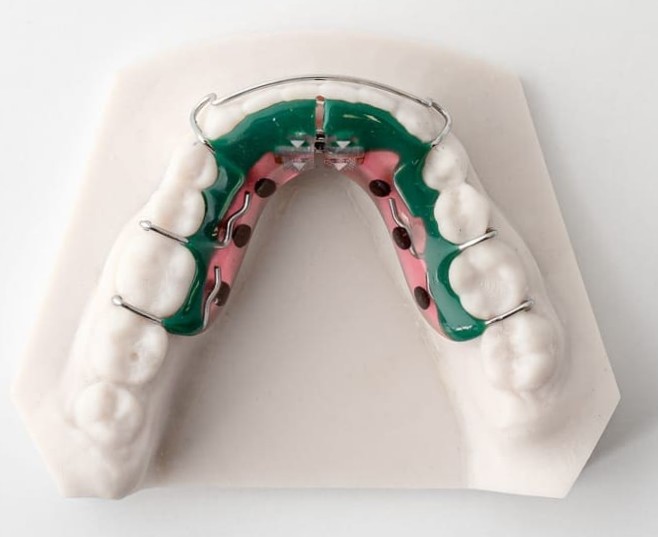
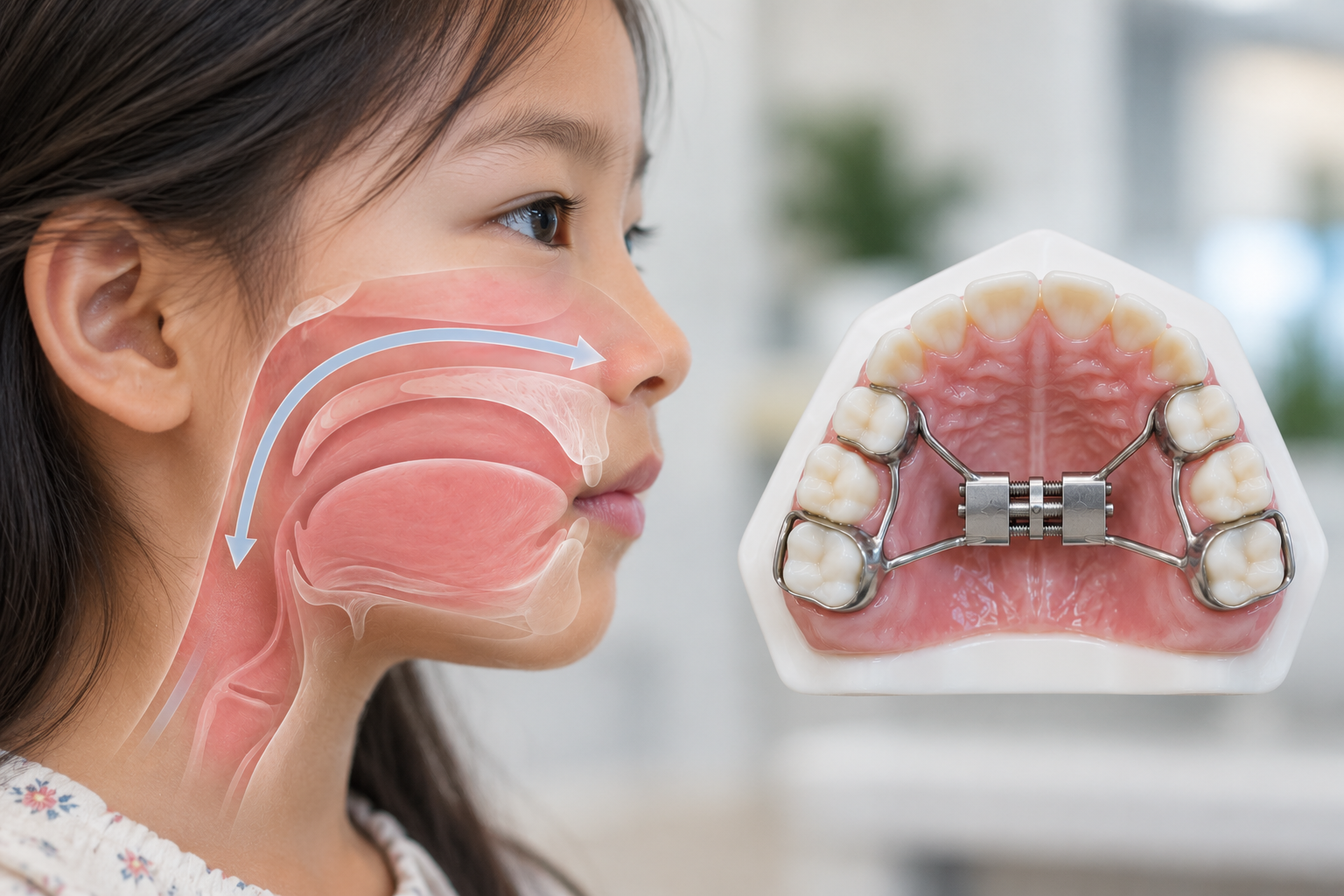
This is where the science becomes more nuanced. Palatal expansion is a well-established orthodontic treatment for appropriately selected patients. When we widen a constricted upper jaw, we also change the anatomy surrounding the nasal cavity. Research has shown that rapid palatal expansion can increase nasal and upper-airway dimensions, and some studies have reported improvements in nasal breathing and sleep-related measurements after expansion. A 2026 systematic review and meta-analysis, for example, found improvements in apnea-hypopnea index and some other measures among children with OSA following rapid maxillary expansion, although the authors acknowledged important limitations in the available evidence (Reference).
So we don't believe it would be accurate to say that palatal expansion has no effect on the airway.
But there is an equally important distinction: Making an airway larger is not the same as proving that we have treated obstructive sleep apnea.
Another 2026 systematic review specifically examined the controlled prospective evidence for rapid palatal expansion as a treatment for pediatric OSA. It identified three new randomized clinical trials, but none included an untreated or watchful-waiting control. The only randomized trial comparing expansion with observation found no significant difference in the change in apnea-hypopnea index between the groups. The authors concluded that extreme caution is warranted before recommending rapid palatal expansion as a treatment for pediatric OSA (Reference).
That helps illustrate why parents may hear conflicting claims about this subject. There is evidence that expansion changes anatomy and may improve breathing or sleep-related measurements in some appropriately selected children. What has not been established is that routinely expanding children prevents sleep apnea or predictably treats sleep-disordered breathing.
What If My Child Has Actually Been Diagnosed With OSA?
This is a different situation. Obstructive sleep apnea is a real medical condition that can have meaningful consequences for a child's health and quality of life. If a child has been appropriately evaluated and diagnosed with OSA, we believe it is reasonable for an orthodontist to participate in a multidisciplinary treatment plan.
If that child also has a narrow upper jaw or another legitimate orthodontic indication for expansion, palatal expansion may be worth considering as one component of treatment. In these situations, we understand why families and their doctors may want to consider multiple reasonable treatment options that could potentially help.
At the same time, parents should understand that expansion should not be presented as a guaranteed cure for pediatric OSA. Even the most recent research remains mixed, and high-quality controlled evidence is limited (Reference).
The potential benefits, limitations, costs, and alternatives should be discussed openly among the family, orthodontist, and appropriate medical providers.
When Does a Child Actually Need Palatal Expansion?
This is an important distinction because airway considerations are only one possible reason for expansion. Palatal expansion is an extremely useful orthodontic treatment when appropriately indicated. A child may have a meaningful discrepancy between the width of the upper and lower jaws, a posterior crossbite, a functional shift of the jaw, significant crowding associated with a narrow upper arch, or another orthodontic problem for which expansion may be beneficial.
In these situations, we aren't expanding because of a theoretical future airway benefit. We are treating an orthodontic problem that exists today. But even when we identify an orthodontic indication for expansion, there is another question we believe needs to be answered: Does this need to be treated now?
There is a difference between determining that a child could benefit from expansion eventually and determining that a child needs expansion during Phase I treatment. That distinction is at the center of our treatment philosophy.
Why We Don't Automatically Expand Children at Ages 5–10
We frequently see children between ages 5 and 10 who have been told they need a palatal expander immediately. Sometimes, after evaluating the child's bite, jaw relationships, developing permanent teeth, and growth, we completely agree. There are orthodontic problems where early intervention can provide a meaningful advantage. A significant crossbite, functional shift, severe skeletal discrepancy, abnormal eruption pattern, or another developmental concern may justify treating a child well before all of the permanent teeth have erupted.
However, sometimes we find only a relatively minor discrepancy. In those situations, one of the most important questions we ask is: What happens if we wait?
If waiting could make the problem substantially harder to correct, interfere with development, compromise the eventual result, or eliminate an opportunity that exists while the child is growing, then early treatment may make sense. However, if we believe we can predictably accomplish the orthodontic objective when the child is older, we often prefer to monitor growth and development. The fact that we can expand an eight-year-old does not necessarily mean we should expand that eight-year-old.
Sometimes One Phase of Treatment Makes More Sense Than Two
Consider a child with a relatively minor transverse discrepancy who could benefit from some expansion. One approach would be to begin Phase I treatment at age eight. We could place an expander, complete the expansion, retain the result, and then monitor the child for several years while the remaining permanent teeth erupt. At age 11 or 12, the child may then begin another course of comprehensive orthodontic treatment.
For certain children, that is absolutely the right approach. But for others, we may be able to monitor growth until age 11 or 12 and incorporate the necessary expansion into comprehensive orthodontic treatment. Instead of completing one treatment now and another treatment several years later, the child may be able to accomplish the necessary orthodontic correction during one period of active treatment. For the right patient, this can mean fewer appliances, fewer appointments, less total time spent in orthodontic treatment, and lower overall cost for the family.
This is why we don't simply ask:
"Can we expand now?"
We ask:
"What do we gain by expanding now?"
If there is a meaningful clinical advantage, early treatment may be worthwhile. If there isn't, waiting may be the better treatment decision.
Isn't Earlier Expansion Better?
There is certainly an age-related component to skeletal expansion. The treatment options available to a growing child are different from those available to a skeletally mature adult, and we would never suggest that age is irrelevant. However, that does not mean there is a tiny window in early childhood during which every child who might eventually benefit from expansion must be treated.
In many appropriately selected children, expansion remains a predictable option later in childhood and can be incorporated into comprehensive orthodontic treatment. This is particularly important when parents of a five-, six-, or seven-year-old are told they must act immediately or they will somehow "miss their chance." Sometimes early treatment truly is advantageous. But when that is the case, we believe parents deserve to understand what specifically will be more difficult, less predictable, or impossible if they wait. "Earlier is better" by itself isn't enough of an explanation.
What About "Airway Orthodontics"?
We don't believe caring about the airway should be a separate philosophy of orthodontics. Every orthodontist should be aware of airway health. We should ask appropriate questions, recognize concerning signs, understand how craniofacial anatomy can interact with breathing, and refer patients for medical evaluation when necessary. However, being airway-conscious does not mean every airway concern requires an orthodontic appliance.
One potential problem with the term "airway orthodontics" is that parents may understandably interpret it to mean that certain orthodontic treatments have been proven to prevent or cure airway disorders. The 2026 AAO white paper does not support that conclusion. In particular, it found that current evidence does not support orthodontic intervention as a means of preventing the development of sleep-disordered breathing (Reference). We believe families deserve to understand that distinction.
Our Philosophy at Life Orthodontics
At Life Orthodontics, we are not anti-expansion, and we certainly are not anti-airway. We routinely use palatal expanders when they are clinically indicated. We take breathing and sleep concerns seriously. We screen for concerning symptoms and refer patients for appropriate medical evaluation when necessary.
What we don't believe in is treating a child simply because treatment is possible. When a child between ages 5 and 10 comes to our office after being told they need an expander, we evaluate that child individually. Sometimes our recommendation is: Yes, we agree. Let's expand now.
Other times it is: Yes, your child may eventually benefit from expansion, but we don't see a meaningful advantage to doing it right now. Let's monitor growth and incorporate it into comprehensive treatment when the time is right.
And occasionally, we may not believe expansion is necessary at all. If we recommend early expansion, we want parents to understand what problem we are treating and what advantage their child receives by treating it now rather than later. If there is no meaningful disadvantage to waiting, we may monitor the child's growth at complimentary observation visits until the appropriate time for treatment.
Our philosophy is simple: Orthodontic treatment should have a clear purpose, and its timing should be supported by the best available evidence.
Sometimes the best orthodontic treatment is the treatment we don't start yet.
References
Palomo JM, Cohen-Levy J, Flores-Mir C, et al. Sleep-disordered breathing and orthodontics: An American Association of Orthodontists white paper update. American Journal of Orthodontics and Dentofacial Orthopedics. 2026;169(4):419-427.
Fernández-Barriales M, López de Luzuriaga M, Lafuente-Ibáñez de Mendoza I, et al. Controlled Prospective Evidence of Rapid Maxillary Expansion Efficacy in Pediatric Obstructive Sleep Apnea: A Systematic Review Update. Journal of Clinical Medicine. 2026;15(8):2976.
Yu K, Li Y, Ngan P, et al. The effect of rapid maxillary expansion on children with obstructive sleep apnea: a systematic review and meta-analysis. Sleep and Breathing. 2026;30(1).